Behind the Interface: What Online Gaming Platforms Know About You — and How to Play Smarter Because of It
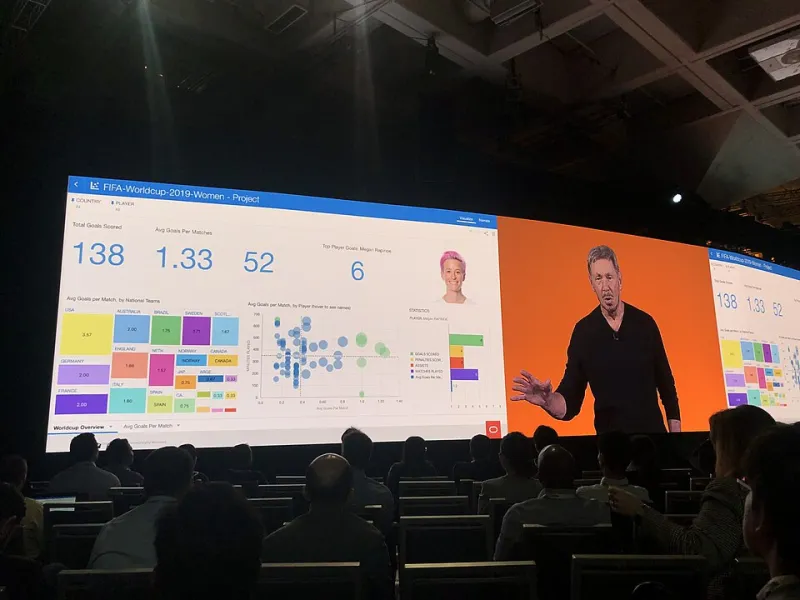
Photo: GeneralAB13, CC BY-SA 4.0, via Wikimedia Commons
Let's be real for a second. Every time you log into an online gaming platform, you're not just playing a game — you're generating data. Clicks, pauses, bet sizes, session lengths, the exact moment you reload after a loss. All of it gets captured, sorted, and fed into systems designed to understand your behavior better than you understand it yourself.
That's not a conspiracy theory. It's just how modern digital platforms work. And if you're serious about playing smart on Satta Kingg, knowing what's happening behind that clean interface isn't paranoia — it's strategy.
The Data Layer You Never See
Every action you take inside an online gaming environment leaves a trace. Behavioral analytics tools — the same kind used by Netflix to recommend shows and Amazon to push products — are standard infrastructure for digital platforms. In a gaming context, they're tracking things like:
- Session frequency and duration: How often you play and for how long before you stop.
- Bet sizing patterns: Whether you increase wagers after losses, after wins, or at random.
- Re-entry behavior: How quickly you come back after logging off, especially after a losing session.
- Response to promotions: Whether you engage more after being offered a bonus or cashback incentive.
- Time-of-day tendencies: When you're most active, and whether late-night sessions correlate with bigger bets.
None of this is secret. Platforms openly discuss using analytics to improve "user experience." But understanding what that phrase actually means for your wallet is where things get interesting.
Algorithmic Nudging: The Push You Didn't Notice
Here's where behavioral data stops being passive and starts becoming active. Algorithmic nudging is the practice of using what a platform knows about you to influence what you do next — without you realizing you're being influenced.
In practical terms, this can look like:
Timed promotions. A cashback offer that appears right after a string of losses isn't random. It's a calculated intervention designed to keep you engaged at the exact moment you're most likely to consider stopping.
Dynamic game surfacing. If your data shows you gravitate toward certain bet types or game formats, the platform can prioritize those in your feed — keeping you in a groove that may not be the most strategically sound one for your bankroll.
Notification timing. Push alerts and re-engagement messages often arrive when platform data predicts you're most susceptible — after a gap in play, or at a time of day when your previous sessions showed impulsive decision-making.
None of this is illegal, and frankly, some of it is just smart product design. But the player who understands these mechanics can step outside the feedback loop. The player who doesn't is essentially being steered.
Predictive Modeling and the Vulnerable Player Profile
This is the part most people don't talk about openly. Sophisticated platforms use predictive analytics not just to personalize experiences, but to identify players who exhibit behavioral markers associated with elevated risk — things like rapidly escalating bet sizes, frequent short-interval logins, or patterns that suggest emotional rather than strategic decision-making.
In regulated markets, this data is sometimes used to trigger responsible gaming interventions. But the same modeling capability can also be used to identify high-engagement players and keep them engaged longer. The data is neutral. The application depends entirely on the platform's priorities.
As a player, the takeaway isn't to assume bad faith — it's to recognize that your behavioral fingerprint is being read, and to make sure the story it tells is one you're writing intentionally.
How to Recognize When You're Being Targeted
Once you know what to look for, the signals become easier to spot. Here are a few patterns worth paying attention to:
Promotions that arrive after losses. If you consistently receive bonus offers following negative sessions, that's not coincidence. Log it. Notice it. Decide whether you want to engage with that offer from a place of strategy or from a place of chasing.
Recommended games that match your most impulsive moments. If certain game types keep surfacing and you notice they tend to appear when your session has already gone sideways, that's worth questioning.
Re-engagement messages that know too much. "We haven't seen you in a while" messages that arrive at suspiciously convenient times — right when you were already thinking about logging back in — are a sign that your behavioral rhythm is being modeled.
Recognizing these patterns doesn't mean you stop playing. It means you stop being reactive and start being deliberate.
Practical Moves That Put You Back in the Driver's Seat
The good news: awareness is most of the battle. Here are concrete steps you can take to play with more agency.
Set your session parameters before you log in. Decide your time limit, your loss ceiling, and your target before the interface has any chance to influence you. Write it down. Stick to it.
Turn off notifications. Seriously. Platform alerts are engineered to pull you back in at strategically chosen moments. Removing that trigger breaks the loop entirely.
Take note of what prompts your re-entries. Was it a notification? A promotion? Boredom? Emotional state after a bad day? Your re-entry triggers are some of the most valuable data points you can collect on yourself — and they're yours, not the platform's.
Use a session log. Tracking your own data — bet sizes, outcomes, emotional state, time of day — gives you a competing dataset. Instead of only the platform knowing your patterns, you know them too. That symmetry matters.
Engage with promotions on your terms. If a cashback offer genuinely improves your expected value and you were going to play anyway, that's a rational use of a promotion. If you're accepting it because you just lost and you're emotionally activated, that's the algorithm winning.
The Kings Who Stay Kings
The players who consistently perform well over time aren't just lucky, and they're not immune to the mechanics described above. What separates them is that they operate with a self-awareness that functions as a counterweight to the platform's influence.
They know what their patterns look like. They know when they're playing sharp and when they're playing on emotion. They treat every session as a data point in a longer game — not as an isolated event where the only thing that matters is what happens in the next thirty minutes.
Satta Kingg is a game of numbers, timing, and discipline. The platform knows a lot about you. The question is whether you know enough about yourself to stay ahead of what it knows.
That's not paranoia. That's strategy. And strategy is how kings are made.